
City Directory Collections for Miami Township
Miami Township never had a verified, complete printed run of its own. Regional and nearby-community collections fill the gap. The Dayton Room at Dayton Metro Library anchors the regional shelf. Meanwhile, the Miamisburg Historical Society and County Archives hold records that can test a name or place against a directory entry. Every result still needs an address-geography check. Remember what a city directory is. It is a commercial historical listing rather than an official resident roll. The table below separates confirmed material from a bibliographic lead whose physical copy remains unlocated.
| Collection | Years | Where Held | Access |
|---|---|---|---|
| Williams' Dayton City Directory catalog serial | Begins “1856?” | Dayton Metro Library catalog | Confirm the needed volume and year with the library. |
| Williams' Dayton Directory scan | 1856-57 | Cincinnati & Hamilton County Public Library digitization | Free regional sample scan. |
| Miamisburg City Directory, Mullin-Kille | 1958 | Ohio History Connection bibliography citation | Lead only. A copy and location were not independently verified. |
| HOBITS obituary and genealogy index | Several bands from 1850 to present | Dayton Metro Library | Free citation search; copies requested from the library. |
| County Archives historical groups | Varies by record type | Records Center & Archives research area | Staff-indexed research and request route. |
No full Township sequence exists. No verified reverse-directory run or last printed local year exists either. Miamisburg sits inside Miami Township. But it is its own city. A Miamisburg street directory listing therefore cannot stand in for Township-wide coverage.
Dayton Room's Miami Township Directory Shelf
The Dayton Room collects more than two centuries of material. Its scope covers Dayton, Montgomery County, and the wider Miami Valley. Open stacks, photographs, maps, manuscripts, newspapers, and genealogy resources make it the natural first stop. It serves well whenever a regional directory points toward Miami Township. Local-history staff will help identify a volume before a visit. The room also offers in-library genealogy databases. Selected newspaper access and Sanborn map coverage for Ohio cities round out the holdings. One caution applies. A specific directory or map still needs confirmation for the address being researched. The Dayton Room's local-history collection page shows the regional starting point. It anchors historical residents directory research.
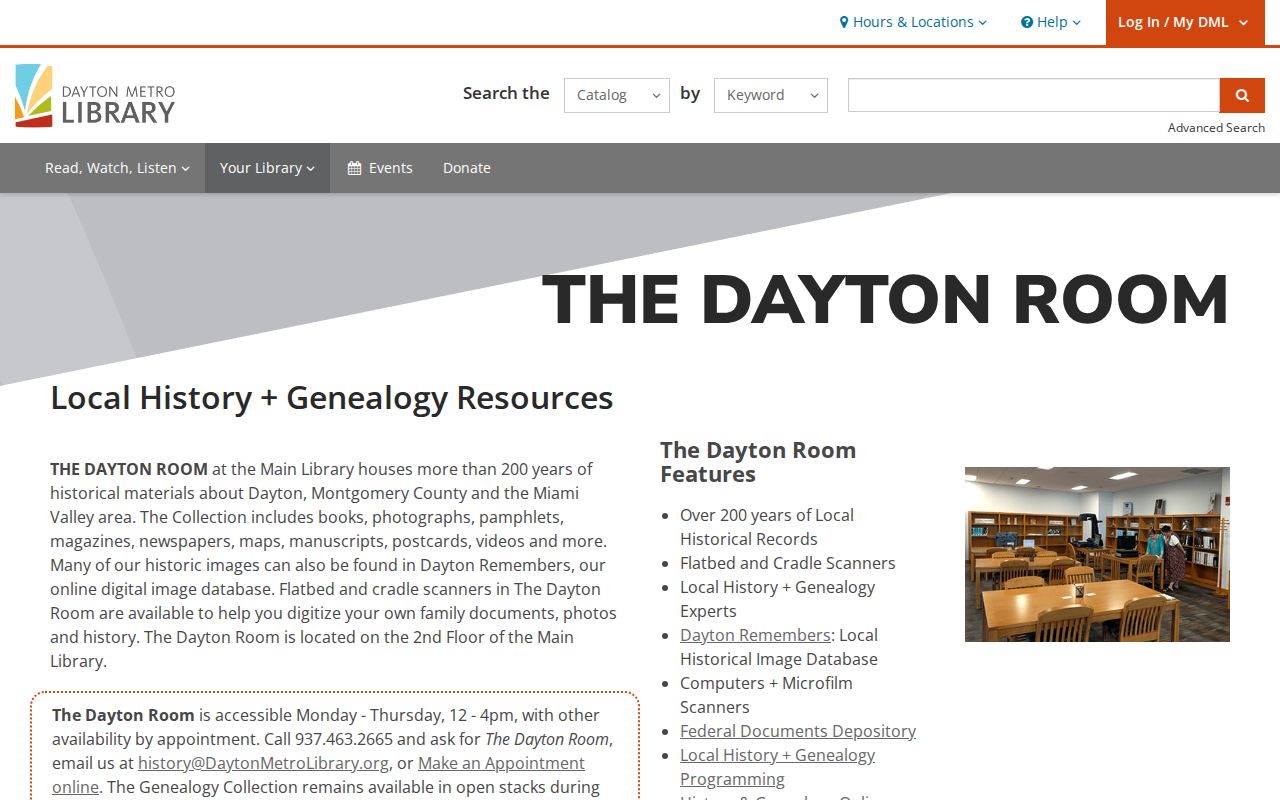
Staff help plus the open-stack collection can turn a directory lead into a dated source rather than an unsupported name match.
Note: Call or email the Dayton Room before relying on a particular volume, database, newspaper date, or Sanborn sheet for a Miami Township address.
Williams' Dayton Directory for Miami Township
Williams' Dayton Directory, City Guide, and Business Mirror, volume I was compiled and published by C. S. Williams. It was printed in Dayton in 1856. The library catalog dates the Williams serial to “1856?–” and lists alternate Dayton-directory titles. That makes the volume a genuine regional starting point for an early surname or address. It does not prove every listed street sat inside the later Miami Township geography. It does not prove every listed person did either.
The digitized pages describe a commercial canvass built on resident-supplied information. An entry can preserve a name, trade, and compressed location notation. It cannot establish age, family relationship, property ownership, or a current mailing address. Copy the original spelling and punctuation exactly before carrying any result into another source.
Miami Township's 1958 Directory Lead
An Ohio History Connection bibliography cites a 1958 Miamisburg City Directory credited to Mullin-Kille, with Centerville and West Carrollton included. That proves an area title existed. It proves nothing else. No complete Miami Township sequence follows from it, nor an online copy, a confirmed shelf location, or coverage of every Township address. The city-versus-Township relationship makes the distinction critical. The Miamisburg Historical Society research page offers local census records, maps, photographs, documents, artifacts, and a research-contact route for Miamisburg-area questions.
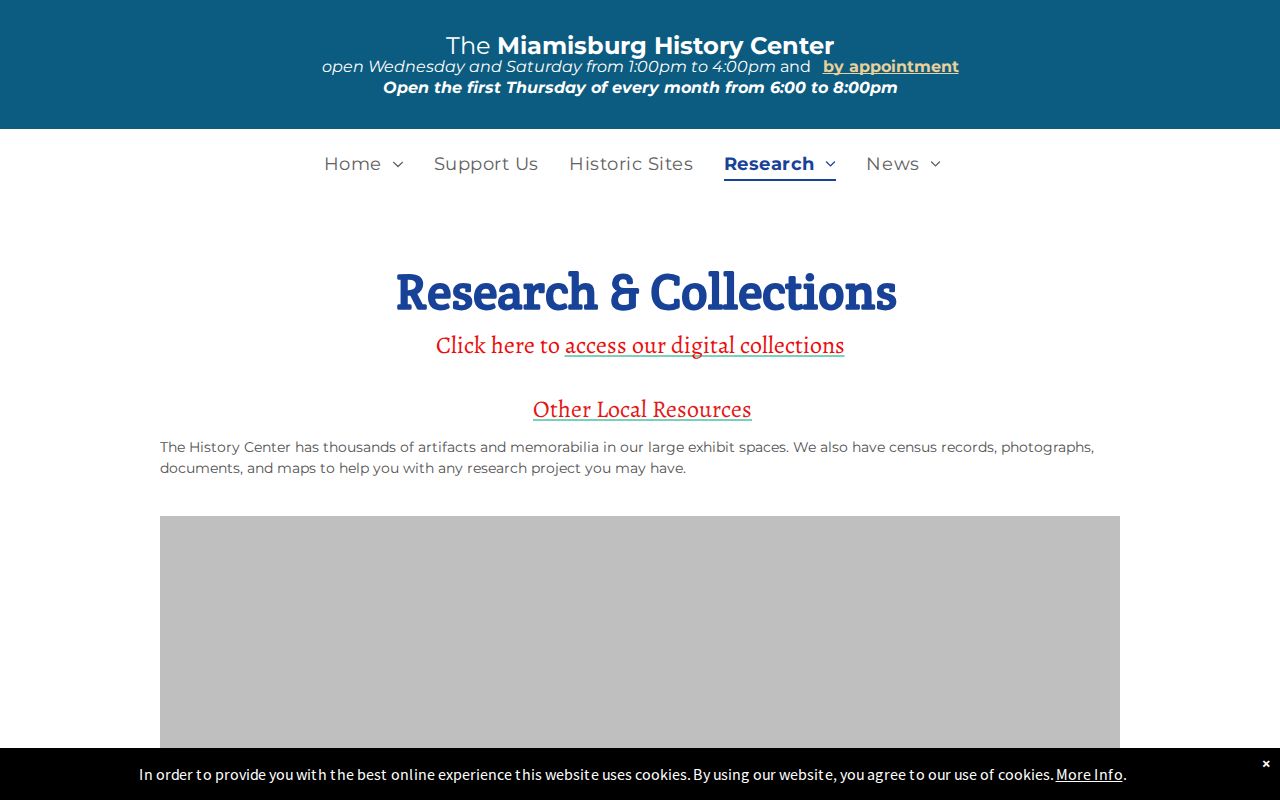
The Historical Society is the closest repository for testing a Miamisburg-area lead against maps, census material, and local documents.
One scarce item is its 1920 census surname-index PDF, abstracted from FamilySearch microfilm 1821423 by the Historic Research & Resource Committee. The Society cautions that surname variants and difficult handwriting affect an index. Confirm the document's geographic scope and compare the underlying census image before calling a result Township-wide. Its digital collections catalog can show whether a photo, map, document, or named local collection is likely present before research access is arranged.
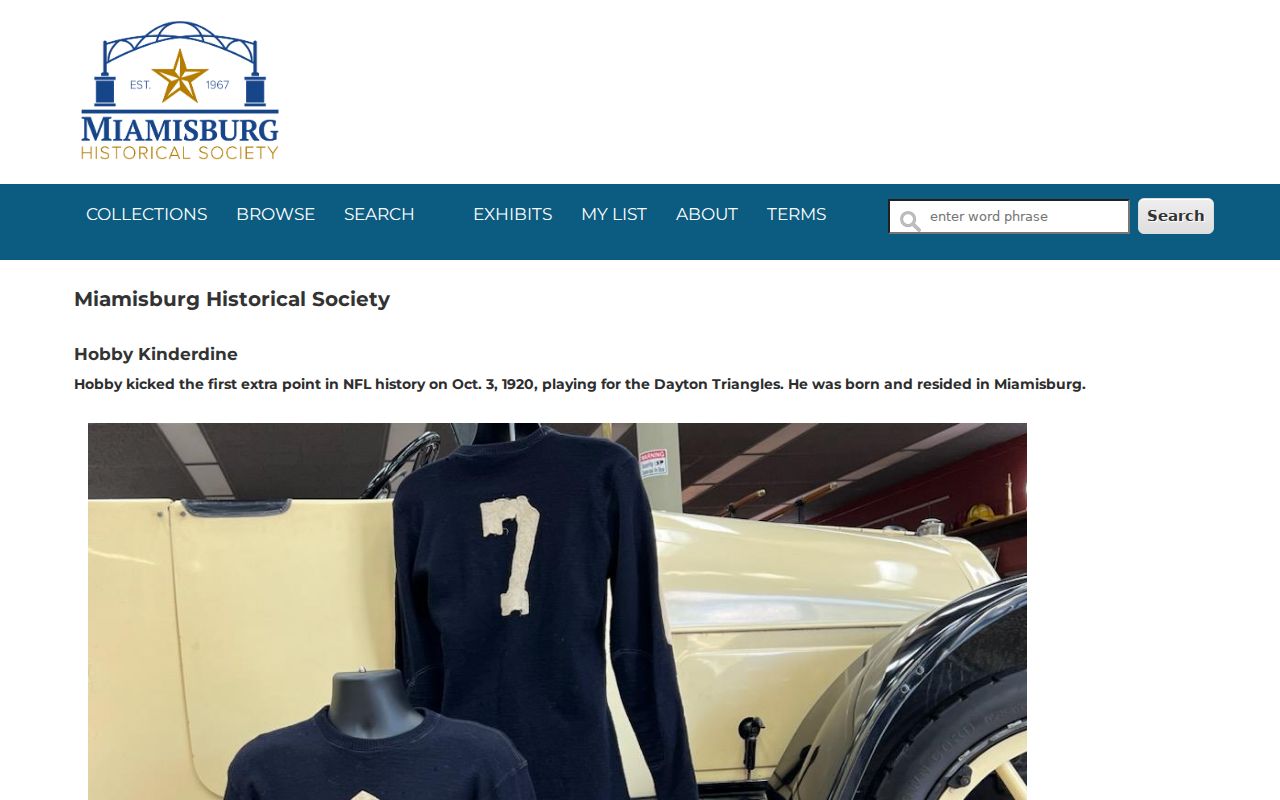
A catalog result is a finding aid, nothing more.
Note: A catalog hit shows that material may be present, not that a confirmed volume covers the needed date or address geography.
Reading Miami Township City Directory Entries
The 1856-57 Williams scan gives a concrete compressed listing: “Barkmeier Frank, cooper, h n s Water b Taylor and Railroad.” It plainly holds a surname, given name, occupation, and shorthand home-location notation. Record those marks exactly as printed. The entry shows no age, family relationship, ownership, or present address. The abbreviation bds appears in the volume without an authoritative key. Never expand it by guesswork.
| Name | Surname and given name as printed, including unusual spelling. |
|---|---|
| Trade or occupation | A descriptive field that can help distinguish people sharing a name. |
| Location notation | Compressed home or street-relationship wording, copied exactly. |
| What is not shown | Age, household relationship, ownership, and a current mailing address are not established by this example. |
- Criss-cross directory
- An address-ordered section, if a verified volume contains one. No Township-wide run was verified.
- Householder index
- A name arrangement centered on a household head, when a particular book supplies that form of index.
- Abbreviation key
- A publisher's explanation of shorthand marks. Preserve an unknown mark rather than assigning it a meaning.
Miami Township HOBITS Directory Companion
A directory entry that hints at a date or a surname gains a lot when you add HOBITS. It is the Dayton Obituary and Genealogy Database. It returns newspaper citations, not full articles. Coverage spans 1850-80, 1897-98, 1900, 1903-18, 1920-39, 1951-57, 1965, and 1985 to the present, along with selected family-history and service notes. You can search by keyword, name parts, publication, date, or citation details like volume, issue, page, and column.
With a full citation in hand, you can request up to three copies at a time from the library. That makes HOBITS a strong companion to the residents directory. A household that vanishes between editions may show up in a notice. A missing listing alone proves nothing. A family could have moved, a person could have died, or the publisher may simply have omitted them.
Note: Match a newspaper citation against a dated directory, census record, or property record. Do this before treating two identical names as one person.
Miami Township City Directory Gaps
A missing stretch of listings does not end the trail. The Montgomery County Records Center & Archives holds probate births and deaths, marriages, divorces, wills and estates, deeds, court material, naturalization records, and tax lists. Smaller groups sit there too. These include motor-vehicle, embalmer, trademark, and stray-animal registers. A name-and-date question may not be answerable in a residents directory. It may yield to one of those record types. Remember, though, that these are county records. They do not by themselves prove Miami Township residence.
Access runs through a staff-indexed research area and a request route rather than open stacks. Make any request precise. Name the record type and the person or property. Give an approximate date and any known citation, parcel, book, page, or court detail. Staff work from a computer-assisted index. It covers more than 47,000 storage locations. A specific ask beats a broad name-only sweep every time.
The County Archives access page lays out the historical records. It also explains how to submit a request.
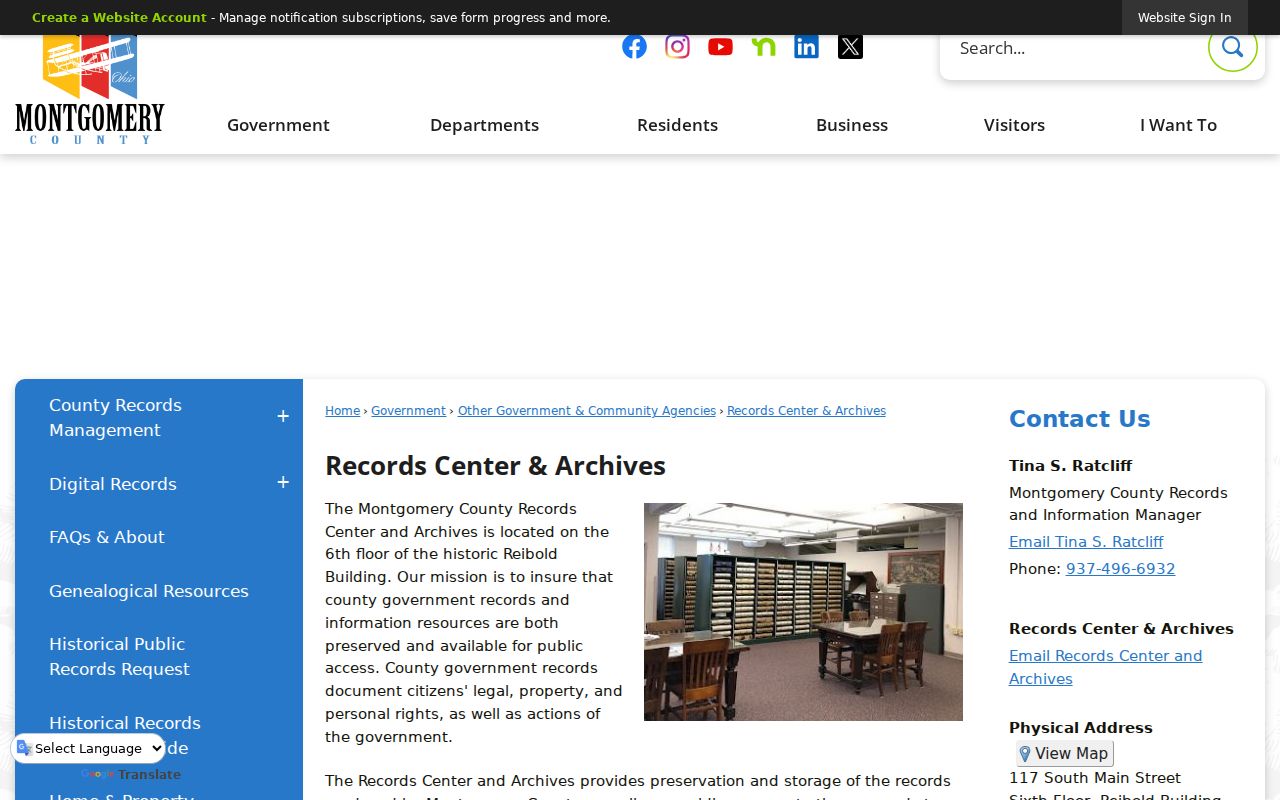
Because Archives staff work from custodial indexes, a narrow request goes further than an open-ended hunt for a person.
Note: Send a record category and date range along with a name or property identifier, not a broad request to locate someone.
Tracing Miami Township City Directories
Treat directory volumes as a dated sequence, not a one-time answer. Start with the most exact surname and address you have. Copy the wording exactly from the first confirmed entry. Then carry those same surname and address variants forward through later editions. Watch how the household record changes. Each publication year pairs well with the nearest released federal census. That pairing gives an independent snapshot of who lived at the address. Compare spelling, location, and household details before linking any two records together. For a modern address chain, the Miami Township street directory offers a separate route. It is built for address-focused lookup.
- Find the earliest confirmed listing and record its spelling, shorthand, address wording, and publication year.
- Check the next available edition for the surname and address variant instead of assuming every year exists.
- Compare the closest released census for household clues, then keep the citation dates beside each result.
- Use HOBITS for death-notice citations and compare those findings with probate, deed, tax, or archival material.
- Use a reverse or criss-cross volume only after the library confirms that the specific volume exists and covers the address.
Federal census images open on a 72-year schedule. Directory years and census years rarely line up. That mismatch is actually useful: agreement between the two strengthens an identification, while disagreement tells you more checking remains.
Miami Township Records Timeline
County record history explains a lot. A historical residents directory search often ends somewhere other than a directory shelf. Montgomery County dates to 1803. Its archival holdings list early marriages and estates from 1803 and deeds from 1805. The Archives itself began in 1980. Digital scanning arrived at the County Imaging Center in 2003. Those milestones describe how access and preservation developed. They are not a promise that every record is digitized or indexed online.
| 1803 | Montgomery County was created; marriages and estates begin in archival holdings. |
|---|---|
| 1805 | County deed records begin. |
| 1856-57 | Confirmed Williams Dayton regional directory edition. |
| 1958 | Mullin-Kille Miamisburg directory is identified in an Ohio History Connection bibliography. |
| 2003 | Digital scanning was added to the County Imaging Center. |
Historical research works best when you keep two things separate: where a record was first created and which office keeps it now. A record can move. Papers about Miami Township may sit in a library, an Archives index, or a county office today, even though they began somewhere else entirely.